Where to Stay in Cape Town for Surf and Beach Days
 Where to Stay in Cape Town for Surf and Beach Days
Cape Town's surf and sand are spread across a long coastline, so your base matters more than your board choice. Here is how the main beach suburbs compare.
Muizenberg: The Beginner's Base
Muizenberg is where most people learn to surf in Cape Town. The beach break is gentle, the water is warmer than further south, and several surf schools operate from the pavilion. A two-hour lesson with board and wetsuit typically costs R350–R500. The train from Cape Town station takes about 40 minutes, and the drive is 25–30 minutes outside peak traffic. Staying here puts you within walking distance of the waves, but the suburb is quiet in the evening, with a handful of restaurants along Beach Road.
For a surf-focused trip, I would book a guesthouse in Muizenberg over a city hotel. The trade-off is distance from the Atlantic seaboard's sunset spots and the Winelands. If you plan to surf three or more mornings, the saved commute is worth it. Otherwise, use Muizenberg as a day trip. Summer (November–March) brings crowds and wind; April–May and September–October offer cleaner conditions and fewer people in the water.
Camps Bay and Clifton: Sunsets, Not Swell
Camps Bay and Clifton are about beach days, not surf sessions. The Atlantic here is cold (12–15°C) and the swell often closes out, but the sand and sunsets are iconic. Camps Bay's strip has hotels, bars and restaurants within walking distance of the beach. Clifton's four beaches are accessed by steep stairs; First Beach has a volleyball net and a younger crowd. Expect to pay R1,500–R3,000 per night for a hotel room in peak season (December–January).
These suburbs suit travellers who want a beach holiday with the city nearby. The drive to Muizenberg for a surf lesson takes 30–40 minutes. I would book here if sunbathing and dining outrank surfing. Skip the area if you are on a tight budget or want easy parking; summer traffic on Victoria Road can be gridlocked. Best months are February–April, when the wind drops and the water is marginally warmer.
Bloubergstrand and Table View: Kite Season
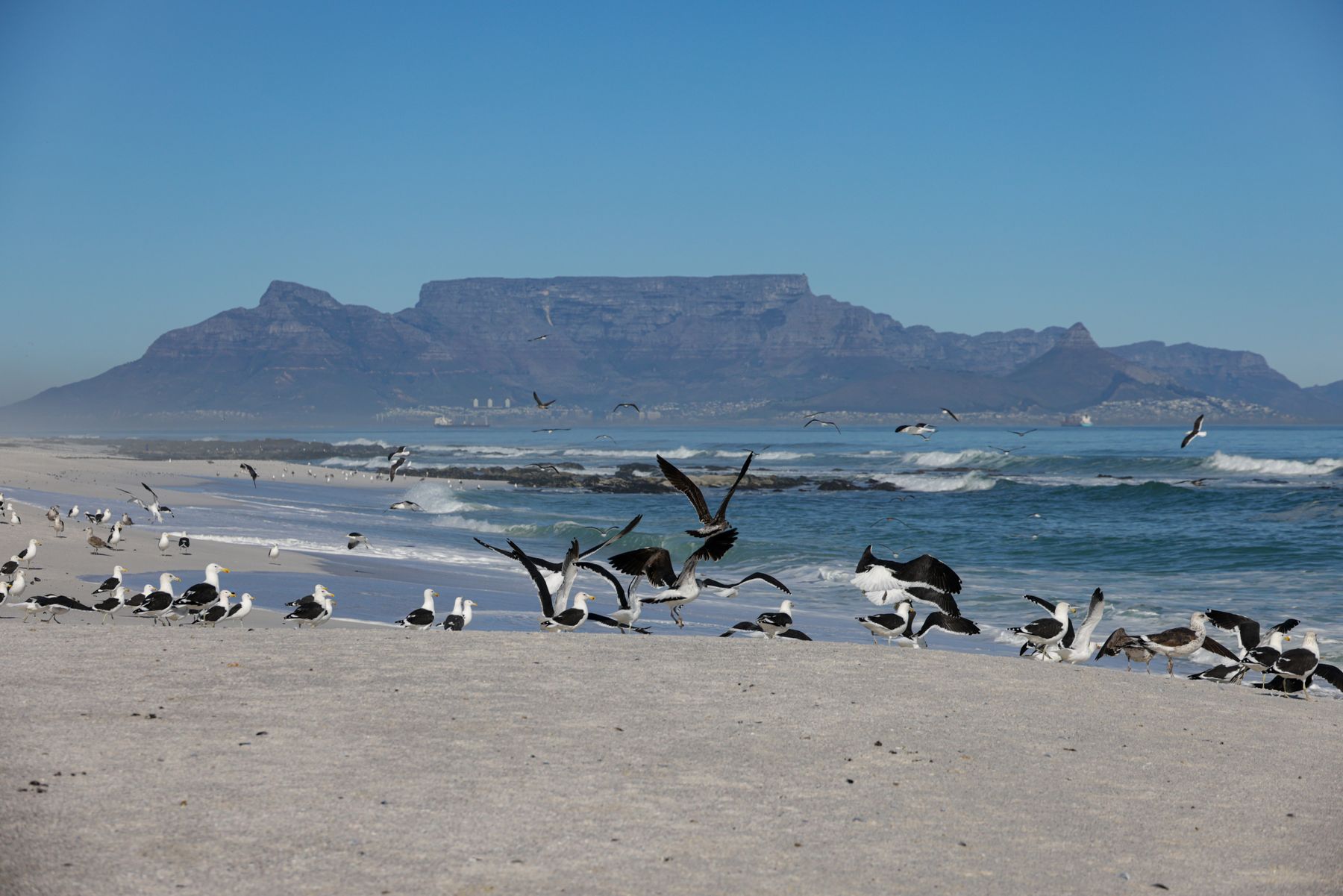
Bloubergstrand, across Table Bay, is the centre of kiteboarding in Cape Town. The southeaster (known locally as the Cape Doctor) blows from November to March, making it one of the windiest spots in the country. The beach is wide and the views back to Table Mountain are the postcard shot. A 20-minute drive from the city centre, it has a quieter, suburban feel with guesthouses and self-catering apartments. Prices are lower than the Atlantic seaboard: expect R800–R1,500 per night for a double room.
Surfing here is inconsistent, but kiteboarders and windsurfers will be in their element. If you are travelling with a mixed group, Blouberg works well: non-surfers can take the ferry to Robben Island or drive to the West Coast National Park. I would book a self-catering unit for a week-long stay. The main downside is the commute to the city centre (30–40 minutes in traffic) and the lack of evening restaurants within walking distance.
The City Bowl and Green Point: The All-Rounder
The City Bowl and Green Point put you within a 20–30 minute drive of both the Atlantic beaches and the False Bay surf spots. Green Point has hotels at various price points (R1,200–R2,500 per night) and is a short walk from the Sea Point promenade. The City Bowl is more urban, with easy access to the N1 and N2 highways. Neither is a beach base in the traditional sense, but they offer flexibility if you want to mix surfing with sightseeing, restaurants and nightlife.
For a first-time visitor who wants to surf a few times but also see the Winelands, Robben Island and Table Mountain, I would book in Green Point. It is safe, central and has reliable parking. The trade-off is that you will drive to the beach every day. Skip the City Bowl if you want to walk to the sand; it is not a beach neighbourhood. Best months for this base are March–May, when the weather is stable and the summer crowds have thinned.
Before you book
The questions people ask about Cape Town, answered with this month’s numbers.
Not strictly for surfing, as the beach and train station are walkable. But to explore other beaches, the Cape Peninsula or the Winelands, a car is far more convenient. Ride-hailing apps work but can be slow in peak season.
Muizenberg's gentle, long-breaking waves are ideal. Several surf schools operate there, and the water is warmer than the Atlantic side. Lessons usually include a board and wetsuit.
The water is cold and the currents can be strong. It is safer to swim at Muizenberg or the tidal pools in Sea Point. Always check with lifeguards on duty before entering the water.
For summer (November–March), a 3/2mm steamer is fine for Muizenberg, but you will want a 4/3mm for the Atlantic. In winter (June–August), a 4/3mm with boots and a hood is advisable.
Autumn (March–May) and spring (September–November) offer good conditions with fewer crowds. Winter brings bigger swells but colder water and more rain. Summer is best for beginners and warm weather.
The Metrorail train runs from the city to Muizenberg, Kalk Bay and Simon's Town. Buses serve Camps Bay and Hout Bay. For Bloubergstrand, a car or ride-hailing is more practical.
Yes, especially for December–January and during major events. Cape Town's popular beach suburbs fill up months ahead. Booking early also secures better rates.
Muizenberg or Simon's Town offer calmer waters and family-friendly amenities. Camps Bay is better for older children and teenagers. Self-catering units in Bloubergstrand suit families wanting space and value.